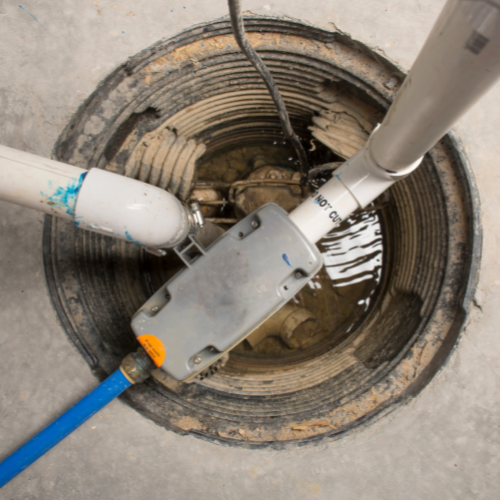
When heavy summer downpours sweep through eastern Pennsylvania, your home’s basement relies on one critical line of defense: the sump pump. Tucked away in its pit, a healthy sump pump quietly channels rising groundwater safely away from your foundation.
However, if you notice your system hums, clicks, or cycles non-stop hour after hour—even after the rain has cleared—it’s a clear warning signal. A sump pump running constantly isn’t just an annoyance on your utility bill; it’s a mechanical vulnerability that risks overheating and failing right when you need it most.
Let’s break down the most common reasons your pump won’t turn off, how to troubleshoot it, and when to bring in an expert technician.
1. A Stuck or Faulty Float Switch
The float switch operates much like the mechanism inside your bathroom toilet tank. As water rises in the sump pit, the float moves upward. Once it reaches a designated height, it flips the switch to turn the pump motor on. As the water level drops, the float sinks back down to shut the motor off.
Over time, the vibrations of the pump can cause the unit to shift inside the pit, pinning the float switch against the rough liner walls. Alternatively, mineral scaling, dirt, and debris can physically jam the switch in the “on” position. If the float can’t drop, the motor will run indefinitely, eventually burning out.
2. A Failing or Broken Check Valve
Your sump pump’s discharge line features a one-way valve known as a check valve. This component ensures that once water is pumped up and out of your basement, it cannot flow backward into the house when the motor shuts off.
If the check valve cracks, wears out, or gets blocked by debris, the water inside the vertical discharge pipe will drain right back into your sump pit the moment the cycle ends. This creates a frustrating loop: the pit fills up immediately, triggers the switch, pumps the water out, takes it right back, and starts all over again.
3. The Pump is Undersized for Your Home
Not all sump pumps are created equal. If your home has a deep basement or is built over a high water table prone to severe local runoff, a standard, low-horsepower retail pump might simply lack the muscle to keep up. When a pump is undersized, it will strain at 100% capacity continuously just to keep water levels stable, which drastically shortens its operating lifespan.
How to Prevent Baseline Basement Flooding
- Test the Float Manually: Every few months, slowly pour a bucket of water into your sump pit to ensure the float rises freely and shuts off promptly once the pit empties.
- Clear Out Pit Debris: Remove the pit cover and look for small gravel, silt, or mud that can jam moving mechanical elements.
- Install a Battery Backup System: Investing in a heavy-duty battery backup or a secondary auxiliary pump ensures your basement stays completely dry, even if storm winds knock down power lines across your neighborhood.
Keep Your Basement Safe and Dry with Beeco’s Plumbing & Heating
Don’t wait for a flooded basement to find out your sump pump is struggling. The family-owned team at Beeco’s Plumbing & Heating provides rapid emergency service, proactive diagnostics, and robust battery backup installations throughout Bucks County, Montgomery County, and Philadelphia.