If you have lived in Southeastern Pennsylvania for any length of time, you know that a “100-year storm” seems to happen every few years. Between the rising banks of the Neshaminy and our region’s heavy, waterlogged clay soil, your basement is under a near-constant state of siege. Protecting your home requires more than just checking the latest weather report. You need a defense system that works when the power goes out and the rain won’t stop.
To prevent basement flooding in Bucks County, you should:
- Install a sump pump with battery backup
- Clean and maintain drains and sewer lines
- Ensure proper yard grading away from your home
- Extend downspouts at least 10 feet from your foundation
- Install a backwater valve to prevent sewer backups
Understanding Bucks County’s “Clay Bowl” Effect
Regional flooding problems start with the soil. Much of Bucks County sits on a thick layer of clay that acts like a heavy sponge. Unlike sandy soil that drains quickly into the water table, this clay-rich earth traps water against your foundation walls, leading to the hydrostatic pressure that causes most basement leaks. When the ground becomes saturated after a heavy spring thaw or summer storm, thousands of pounds of wet soil push against your foundation. Through even the smallest crack or unsealed joint, water will eventually find its way inside. It is not a matter of if, but when.Your First and Last Line of Defense: The Sump Pump
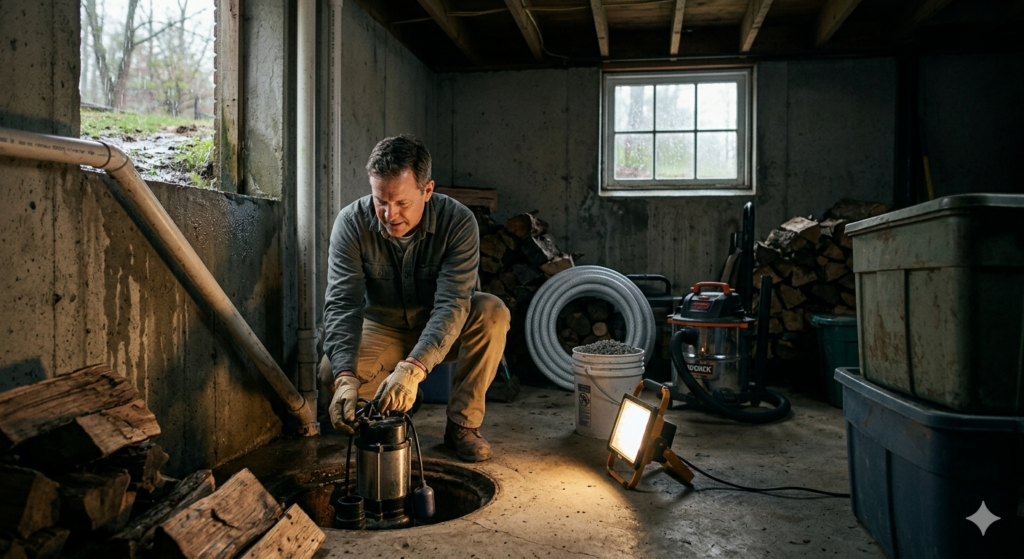
Most homeowners forget about their sump pump until a storm hits. In Bucks County, your sump pump is the only thing standing between a dry basement and major water damage. However, even the best pump is useless if the power goes out. It’s often not the start of the storm that causes flooding — it’s what happens after the power fails. Without a working pump, water quickly fills the sump pit and spills into your basement. That’s why we strongly recommend installing a battery backup sump pump system. These systems automatically activate when power is lost, ensuring your home stays protected even during severe storms. Also, keep in mind that sump pumps don’t last forever. If your unit is over 7 years old, it may be time to consider a replacement before it fails when you need it most.Slow Drains and Sewer Backups (The Invisible Threat)
Flooding doesn’t always come from outside. In many cases, it starts inside your plumbing system. During heavy rainstorms, municipal sewer systems can become overwhelmed, causing dangerous backflow into homes. If you notice slow drains, gurgling toilets, or foul odors during storms, these are warning signs of a bigger issue. Professional drain cleaning services can remove buildup like grease, hair, and debris from your pipes, restoring proper flow. For more severe issues, sewer line inspections and repairs may be necessary to prevent backups. Preventative maintenance is far more affordable than dealing with a full sewage backup.Exterior Grading: Use Gravity to Your Advantage
Your yard plays a major role in protecting your home. If your property slopes toward your foundation, water will naturally collect around your basement walls. Homeowners should follow the “6 in 10” rule — your yard should slope away from your home at least 6 inches over the first 10 feet. This helps direct water away from your foundation. Also, check your window wells regularly. Leaves and debris can clog drains, turning window wells into water traps during heavy rain. Keeping them clean and installing covers can prevent sudden flooding.The Gutter Extension Myth
Many homeowners believe clean gutters are enough to prevent water issues, but where the water drains is just as important. If your downspouts release water too close to your home, that water will simply cycle back toward your foundation. In Bucks County’s clay-heavy soil, this is a major issue. Downspouts should extend at least 10 feet away from your home using solid piping or underground drainage systems. This helps keep water out of the “danger zone” around your foundation.Check Valves: A Simple Solution for Sewer Backup Prevention
If you live in an older home or an area prone to sewer overload, installing a backwater check valve can provide critical protection. This device allows wastewater to exit your home but automatically closes if water tries to flow back in from the municipal sewer system. It’s a relatively small investment that can prevent a major and costly sewage backup.Frequently Asked Questions
What causes basement flooding in Bucks County?
Heavy rain, clay soil, sump pump failure, and sewer backups are the most common causes.
Do I need a sump pump backup?
Yes — especially in Bucks County where storms often cause power outages.
How often should I clean my drains?
Most homeowners should have drains professionally cleaned every 1–2 years.