For any homeowner in Bucks County, few phrases inspire as much dread as a collapsed sewer line. Buried deep underground beneath your lawn, driveway, or basement floor, your main sewer pipe is responsible for carrying all wastewater away from your home toward the municipal sewer system. When this main pipeline cracks, sags, or collapses entirely, the results can be catastrophic—leading to sewage backups, property damage, and thousands of dollars in emergency repairs if ignored.
Because sewer lines are invisible during daily life, minor cracks and root infiltrations often go unnoticed until a total sewer line collapse occurs. Understanding the early warning signs, recognizing environmental risk factors in local communities like Doylestown, Bensalem, and Southampton, and knowing when to call for emergency sewer line repair and replacement can save you from an overwhelming plumbing crisis.
What Causes a Sewer Line to Collapse?
Sewer line failures rarely happen overnight. They are usually the result of long-term structural wear, environmental pressures, or outdated piping materials. The most common causes of a collapsed drain pipe in Bucks County homes include:
- Tree Root Infiltration: Tree roots naturally grow toward sources of moisture and nutrients. Microscopic cracks or loose pipe joints allow tiny root hairlets to enter the sewer pipe. Once inside, roots expand, catch debris, and exert extreme outward pressure until the pipe ruptures. Read our detailed guide on how to know if tree roots are infiltrating your sewer line for deeper insights.
- Aging Piping Materials (Cast Iron & Orangeburg): Many older homes in towns like Yardley, Southampton, and Doylestown were built with cast iron or Orangeburg (bituminized fiber) sewer pipes. Cast iron corrodes and thins over 50+ years, while Orangeburg disintegrates under soil weight, causing a complete structural breakdown. If you own an older property, review our advice on plumbing red flags when buying an older home.
- Soil Shifting and Freeze-Thaw Cycles: October and November mark the beginning of ground temperature shifts in Southeastern Pennsylvania. As the soil freezes, expands, and thaws, un-reinforced or offset pipes shift out of alignment (known as a “sewer bellied pipe”), eventually collapsing under soil load.
- Extreme Clogs and Pressure Build-up: Untreated blockages from grease, heavy paper, or debris cause severe pressure drops and standing water inside the line, accelerating pipe wall deterioration.
5 Critical Warning Signs of a Collapsed Sewer Line
Catching a failing main sewer line early can mean the difference between a simple spot repair and replacing your entire underground lateral. Look out for these five red flags:
1. Frequent, Multi-Fixture Backups
If a single sink or toilet is slow, it is likely an isolated fixture clog. However, if using your washing machine causes water to back up into your basement floor drain, shower, or downstairs toilet, you likely have a main drain pipe failure. Explore our guide on the top 7 signs your sewer line is broken to cross-check your symptoms.
2. Soggy, Unusually Green Patches on Your Lawn
Is one area of your grass lush, overly green, or sunken despite cold October weather? Underground sewage acts as a potent fertilizer. A fractured or collapsed pipe allows wastewater to pool under your yard, creating soft, smelly sinkholes.
3. Persistent Sewer Gas Odors
A healthy, fully intact sewer line is completely airtight. If you smell foul sewer gas inside your home, near basement drains, or around your yard, your main line has developed a crack or structural rupture allowing trapped gases to escape.
4. Gurgling Toilets and Mold Growth
Air trapped behind a collapsed section of pipe escapes back up through fixture traps, producing distinct gurgling sounds from your toilets. Additionally, sewage leaking behind walls or beneath basement floors rapidly spikes humidity levels, triggering sudden mold growth.
5. Pest and Rodent Infestations
Rats and insects thrive in broken sewer pipes. A cracked underground lateral gives pests an open entryway into your home’s foundation walls and crawl spaces.
How Professional Plumbers Diagnose and Fix Sewer Collapse
Guesswork has no place in modern plumbing. At Beeco’s Plumbing & Heating, we utilize state-of-the-art diagnostic technology to locate the exact position, depth, and severity of underground pipe damage before digging up your lawn:
1. HD Sewer Camera Video Inspections
We feed a waterproof, high-definition sewer camera with a radio transmitter through your cleanout access point. This live visual feed allows our technicians and homeowners to see inside the line in real-time, confirming whether you are dealing with root intrusion, a crushed pipe, or a heavy grease blockage. Learn more about advanced diagnostic methods in our article on sewer line repair expert techniques explained.
2. Hydro-Jetting High-Pressure Cleaning
If the pipe structure is still intact and suffering from severe grease or heavy root buildup, specialized hydro-jetting services use high-pressure water streams to scrub pipe walls completely clean without harsh chemical damage.
3. Trenchless Sewer Repair vs. Excavation
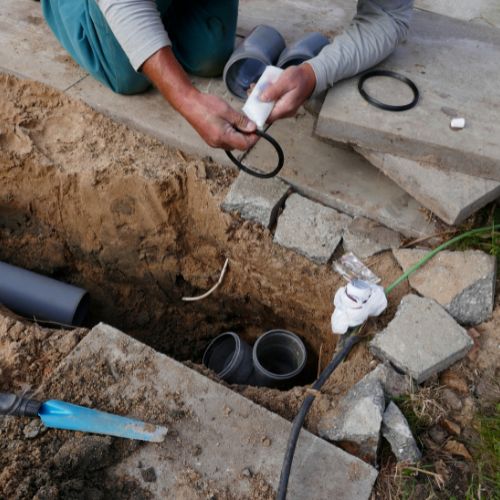
Depending on soil conditions and pipe accessibility, modern repairs can often be performed using trenchless pipe lining or pipe bursting methods, avoiding major landscape destruction. For completely collapsed lines, traditional excavation ensures a brand-new, modern PVC line is installed with proper drop pitch.
📋 Summary Checklist: What to Do in a Sewer Emergency
- Stop Water Usage: Immediately cease running dishwashers, washing machines, showers, or flushing toilets to prevent internal flooding.
- Locate Your Main Cleanout: Know where your sewer cleanout cap is located in your basement, garage, or front yard.
- Avoid Chemical Drain Cleaners: Harsh off-the-shelf chemicals will not clear a collapsed pipe and can burn technicians during inspection.
- Call a Licensed Local Plumber: Request a camera inspection to pinpoint the failure.
Trusted Local Sewer Line Services Across Bucks County
Whether you need an emergency evaluation in Bensalem, professional drain clearing in Feasterville, or comprehensive sewer pipe repair in Doylestown, Southampton, or Yardley, Beeco’s Plumbing & Heating is here to help. Discover our full range of emergency and scheduled options on our core services page or learn about our team’s commitment to quality craftsmanship on our about us page.
If you suspect a collapsed sewer line, slow drains, or foul sewer odors around your home, don’t wait for a complete backup. Contact Beeco’s Plumbing & Heating today to schedule your camera inspection!